I’m a user experience researcher and workshop facilitator, passionate about personal dimensions of health.
I teach Design, People, and Society, a required course about research and ethics, in the Masters’ of Interaction Design (MDes) program at the California College of the Arts (CCA).
Until October 2023, I worked as a Senior User Experience (UX) Researcher at LinkedIn. I’m obsessed with figuring out creative ways to engage my teammates throughout each project. In a work-from-home world, this means bringing improv games into the Zoom room, creating color-coded workspaces on virtual whiteboards, curating manageable collections of emojis, and picking out the right music to set the stage as people log in. I enjoy speaking about this work at events, such as Control the Room in February 2021 and the 3rd Anniversary Celebration hosted by +Mujeres en UX Chile in March 2021.
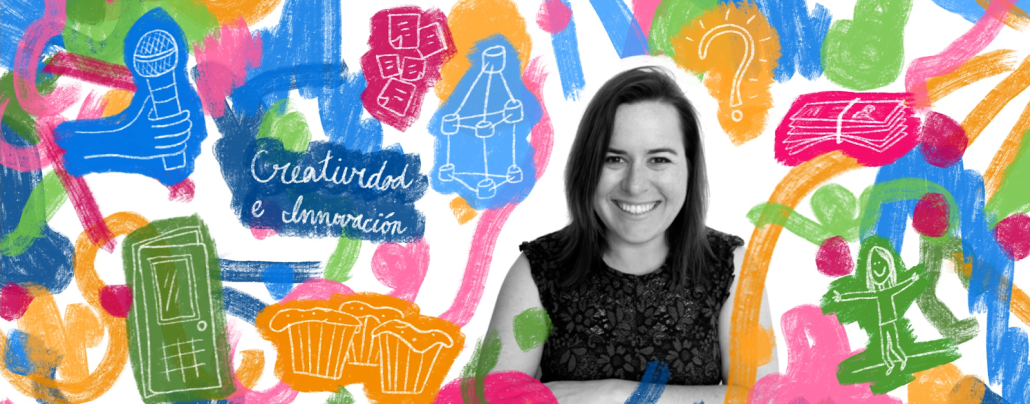
Before joining LinkedIn in the final face-to-face days before COVID-19 sent us all home, I researched topics like security, privacy and automation at Workday, where my colleague Emma Siegel interviewed me for the Workday Design Blog and created the colorful collage you see above. My path into working in tech was unusual, and I always find it energizing to speak with emerging researchers. If this is you, say hi! ;)
I got interested in UX while teaching entrepreneurship classes at universities in Chile.

Leading workshops in Iquique, Chile. 2013.
I lived in Chile for four years—one year while completing an undergraduate degree in Latin American Studies + three years working in Chile’s growing tech scene, affectionately known as ‘Chilecon Valley.’ Teaching business and leadership courses from the angle of design thinking and user experience, I’d read books in English and paraphrase them for my students in Spanish. My students—from 19-year-old college freshmen to grown-up entrepreneurs—immediately understood the concepts and I was hooked. So I decided to return to my hometown, San Francisco, to enroll in an intensive course in User Experience Design. Sidenote: Between my stints in Chile, I worked in China for four years. Here’s a more detailed version of my global career story.
I’m an avid student of yoga and meditation.
These contemplative practices have given me new ways to cultivate focus and build community. Inspired by the intersections between these tools and my work, I gave a talk called How Yoga Transformed my User Research Approach at Workday’s internal design conference in 2019. I completed my 200-hour yoga teacher training in April 2022 and have taken specialized courses in trauma-informed yoga and pranayama.
Passionate about personal dimensions of health, I’ve organized events to bring people together and shed light on taboo topics.
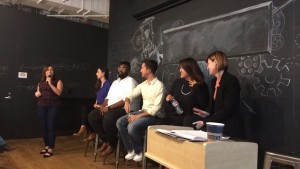
The first Design Sprint: Sexual Health. That’s me, standing, with panelists Rachel Gelman (pelvic floor physical therapist), DeMarus Allen-Batieste (orchestral clarinetist and LGBT health advocate), Michael Vargas (improv teacher and podcast host), Zabrina Law (trade marketing manager at LELO), and Elise Racine (co-founder of tabú).
In 2016 and 2017, I organized an event called Design Sprint: Sexual Health at General Assembly in San Francisco. More than 80 people showed up on two Saturday mornings in October for a broad discussion about the future of sexual health. These events changed my life; they connected my public and private lives and connected me with a new community.
The community we created during those day-long events continues to thrive. Here is the Facilitators’ Guide we used for the second event. Several attendees have brought these activities into their jobs, integrated ideas into their projects, and continued to collaborate with teams they formed during these events.
Since then I’ve served as a facilitator and speaker at a handful of gatherings on similar topics.
If you’d like to chat more about any of this, I’d love to hear from you!
Please feel free to contact me directly: leslie [dot] forman (at) gmail [dot] com. You can also find me on LinkedIn.